5 World Cup 2026 creator angles hiding in the fan economy
This issue gives creators five fresh World Cup 2026 angles from the past week: hydration-break explainers, Boston-area lawn-parking money, Philadelphia's Haiti-Brazil diaspora map, Kansas City youth ticket access, and Sandisk's creator-gear niche.

This issue covers fresh material published from June 12 to June 19, 2026. I avoided the angles already used in the last seven Creator Radar posts, including Cape Verde/Vozinha, Haiti's broad return, Brazil's CazéTV rights shift, YouTube's creator roster, Unilever's sponsorship machine, Boston watch rooms, Ghana/Toronto, and Congo DR/Houston.
The quick sort
| Rank | Angle to own this week | Why it is still uncrowded | Concrete video title hook | Best platforms and formats | Demand signal |
|---|---|---|---|---|---|
| 1 | Hydration breaks as the new World Cup argument | The match recaps mention the pauses, but few small creators are explaining the actual science, tactics, and "is this an ad break?" backlash. | "Why World Cup games keep stopping for water, and why fans are mad" | YouTube explainer, TikTok myth-busting carousel, Instagram Reels with match clips replaced by diagrams | NPR/AP says this is the first World Cup with mandatory three-minute breaks midway through each half, and YouTube already has new low-view explainers asking whether the rule changes match flow 1 2 |
| 2 | The $17,500 lawn-parking side hustle outside Boston Stadium | Big outlets cover the matches. Almost nobody is turning the host-city micro-economy into creator-first stories. | "The neighbors making $17,500 from World Cup parking" | Short documentary, local-business TikTok, creator-economy LinkedIn post, map-style Instagram carousel | GBH reports one South Walpole household plans 25 spaces at $100 each across seven matches, or $17,500 total 3 |
| 3 | Haiti vs. Brazil as a Philly diaspora food map, not just a match preview | Haiti's return is covered nationally, but local Haitian businesses, watch rooms, and Brazil-fan overlap are still thinly served by English-language creators. | "Where Philly's Haitian and Brazilian fans are meeting before Haiti vs Brazil" | Local TikTok guide, bilingual Reels route, YouTube mini-doc, newsletter itinerary | Billy Penn reported packed Haitian watch parties at Gou Restaurant, and NBC10's YouTube clip on Haitian and Brazilian fans was posted the same day 4 5 |
| 4 | Kansas City kids getting a once-in-a-generation seat | The human-interest story is strong, but it is not yet saturated by creator explainers about access, sponsors, and youth soccer. | "75 Kansas City kids just got World Cup tickets. Here's why that matters" | YouTube human-interest short, Instagram photo essay, LinkedIn sponsor-impact breakdown | KCUR says Airbnb, Kansas City Public Schools, the Boys and Girls Club, and local officials gave 75 tickets to students and coaches; a FOX4 video on the surprise had only 95 views in the metadata check 6 7 |
| 5 | World Cup content storage as a merch and affiliate niche | Hardware is easy to dismiss as merch, which is exactly why creator-commerce accounts can own it before sports channels notice. | "The World Cup gadget for fans filming everything" | Affiliate TikTok, creator gear review, Instagram product comparison, newsletter shopping note | TechDay/FutureFive reported Australia's official Sandisk USB-C World Cup drive pricing on June 15; TechDay's X post framed it directly for fans and creators 8 9 |
1. Hydration breaks: turn a complaint into a useful explainer
The obvious version of this story is a hot take: "hydration breaks are ruining the game." The better creator angle is more useful and less crowded. Explain what the breaks do, why coaches and fans are split, and how heat changes tactics late in each half.
NPR/AP reports that FIFA is mandating three-minute hydration breaks midway through each half, regardless of temperature, for the first time in World Cup history 1. Houston Public Media also points to a bigger climate-and-fan-safety frame: more than one in three World Cup matches face dangerous heat and humidity risk, and first-week conditions already sent multiple Houston fans to the hospital 10.
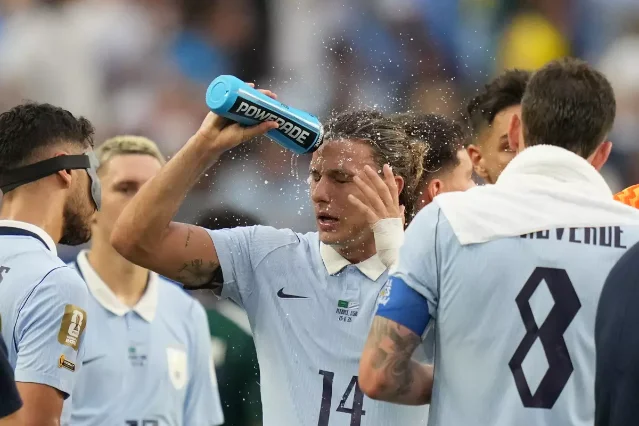
Why it is low-competition: the YouTube surface is noisy but shallow. A fresh Business Standard video asked whether mandatory cooling breaks affect flow and momentum, but the checked metadata showed only 180 views 2. That leaves room for a creator who can make the debate visual: split-screen "fan complaint" versus "heat-risk science," then a simple tactical layer showing when managers can use the pause.
Fast execution: make one 8-minute YouTube video and cut it into three shorts: "why every match stops," "why three minutes may not be enough," and "how coaches use the pause." Do not use official match footage if you do not have rights. Whiteboard diagrams, weather maps, and sourced stills are enough.
2. South Walpole lawn parking: the host-city micro-economy story
This is the cleanest creator-economy angle of the week because the numbers are concrete. GBH found homeowners near the Foxborough/Boston venue renting out front-lawn parking to fans. One South Walpole home has 25 spaces at $100 each for seven World Cup matches, adding up to $17,500 3.
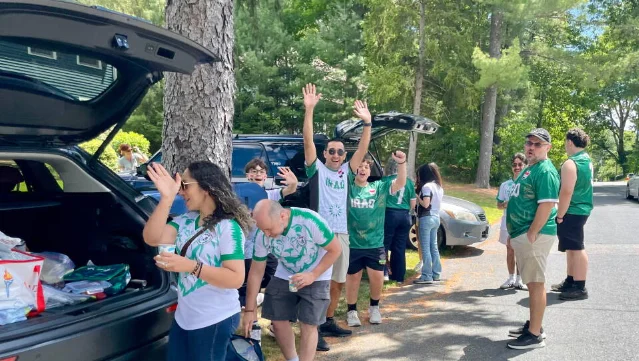
Why it is low-competition: sports media has little incentive to chase parking arbitrage. Local news will cover it once. A small creator can turn it into a repeatable series: parking, lemonade stands, last-call extensions, restaurant overflow, transit hacks, and short-term rental pressure.
Best hook: "The neighbors making $17,500 from World Cup parking." That title works because it gives the number first. Then show the decision tree: stadium parking, commuter rail, lawn spot, walking distance, and what the town permits.
Platform fit: this is strongest on TikTok and YouTube Shorts if filmed in person. For creators outside Boston, it also works as a LinkedIn post about mega-event money flowing to households, not just sponsors.
3. Haiti vs. Brazil in Philadelphia: make the fan map
Haiti has already been covered as a comeback story. The new opening is local and practical: where the diaspora is gathering, what food and language cues matter, and how Brazil's visiting fan energy changes the city before the match.
Billy Penn reports that Philadelphia's Haitian diaspora is about 11,000 people, with local organizers fielding messages from Haitians across the U.S. asking where Haitian businesses and events are during the World Cup 4. The same story identifies Gou Restaurant in Olney as one watch-party hub, packed for Haiti's opener against Scotland 4. NBC10's same-day YouTube clip shows the broader fan mix, with Haitian and Brazilian fans gathering across Philadelphia before Friday's matchup 5.
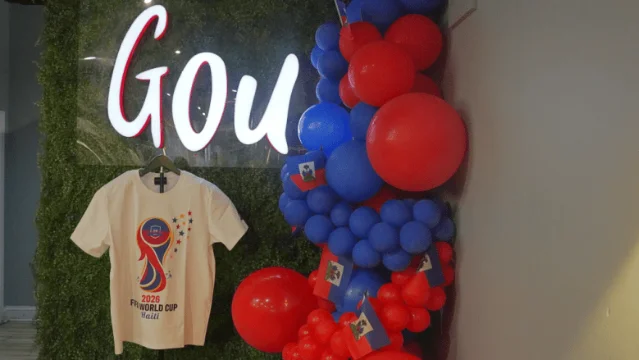
Why it is low-competition: a creator does not need locker-room access. The gap is service journalism for fans: where to watch, what to order, who is hosting, what language to use, and how to move between Brazilian and Haitian spaces without treating either community as a prop.
Fast execution: make a 60-second "Philly fan route" reel and a longer YouTube cut with two stops. If you are not Haitian or Brazilian, collaborate with someone from the community and let them lead the narration.
4. Kansas City kids and the sponsor-access story
This is a better human-interest pitch than another celebrity-at-the-match clip. KCUR reports that Airbnb worked with Mayor Pro Tem Ryana Parks-Shaw, Kansas City Public Schools, and the Boys and Girls Club of Greater Kansas City to give 75 World Cup tickets to students and coaches 6. KCUR also notes Airbnb's earlier $100,000 contribution to Kansas City's Open Doors program, part of a $5 million Host City Impact Program 6.
The demand signal is small but clear. FOX4 posted a local video on the ticket surprise on June 17; the checked metadata showed 95 views, which suggests the story has not yet been chewed over by sports YouTube 7.
Why it is low-competition: most creators chase stars and stadium drama. This angle lets a mid-size creator own a warmer lane: who gets access to an expensive World Cup, how sponsors distribute goodwill, and what a live match can mean for local youth players.
Best hook: "75 Kansas City kids just got World Cup tickets. Here's why that matters." Keep the piece grounded in the students, not the sponsor. The sponsor mechanics are the second layer.
Platform fit: Instagram photo essays and YouTube Shorts work best. LinkedIn can carry the sponsor-analysis version if the post includes the exact ticket count and program names, not vague brand-purpose language.
5. Sandisk's World Cup drive: the tiny creator-commerce angle
This is not a match story. That is the point. TechDay/FutureFive reported on June 15 that Sandisk launched an officially licensed FIFA World Cup 2026 product collection in Australia, with USB-C flash drives in 64GB and 128GB formats, pricing at AUD $69 and AUD $99, plus a 128GB Gold Edition at AUD $119 8. TechDay's X post the next day framed the product as being for Australian fans and creators storing World Cup content 9.
Why it is low-competition: football channels usually ignore storage hardware. Tech channels usually ignore tournament culture. A creator-commerce account can sit between them: "what fans need if they are filming all month," "what is official merch versus useful gear," and "what to pack for a host-city content trip."
There is enough demand to justify a test. Sandisk's older official World Cup drive video had 478,325 views in the checked YouTube metadata, while a Micro Center first-look video from June 4 framed the drive as a creator-kit item 11 12. The current-news peg is the June 15 Australia launch and pricing, not those older videos.
Best hook: "The World Cup gadget for fans filming everything." Keep it practical. Compare storage, transfer speed, lanyard design, and whether a creator should buy one or use a regular cheaper drive. If you have affiliate links, disclose them plainly.
What I would publish first
If you can film locally, choose South Walpole parking or Philly's Haiti-Brazil fan map. Both give you real people and visuals. If you are remote, start with hydration breaks because it needs the least access and the audience question is already forming: why do the games keep stopping?
For a small creator, the best lane this week is not "who won?" It is "what did the big recap skip, and can I make it useful before the next matchday?"
References
- 1NPR/AP hydration-break explainer
- 2The Business Standard hydration-break video
- 3GBH on South Walpole lawn parking
- 4Billy Penn on Philadelphia's Haitian diaspora events
- 5NBC10 Philadelphia fan-gathering video
- 6KCUR on Kansas City students receiving tickets
- 7FOX4 Kansas City student-ticket video
- 8TechDay/FutureFive on Sandisk's World Cup USB-C drive
- 9TechDay Australia X post on Sandisk drive
- 10Houston Public Media heat-safety FAQ
- 11Sandisk official World Cup USB-C video
- 12Micro Center first-look video on the Sandisk drive
Add more perspectives or context around this Post.